Agriculture 4.0 – The Key to Sustainable Development
The agricultural sectors of the United States and Vietnam share many similarities. However, Vietnamese agriculture has not yet actively leveraged information technology in production, market research, or product marketing.
According to Professor Ha Ton Vinh, Director of the Executive Leadership Program at California Miramar University (USA), over the next five years, the world will enter the fourth information revolution—the Artificial Intelligence (AI) revolution. During this era, computers, the internet, and various applications will gradually replace tasks traditionally performed by humans at home, in businesses, factories, or service facilities. Therefore, digital transformation in agriculture presents both an opportunity and a stepping stone for Vietnamese enterprises to elevate their standing on the global agricultural map.
Digital Transformation in U.S. Agriculture
Professor Ha Ton Vinh cited the lesson of the United States, where digital transformation has become a crucial part of the agricultural sector. Key factors behind the success of U.S. agriculture include information on scientific breakthroughs, technological applications in farming and cultivation, domestic and international market access needs, product marketing, local weather updates, and financial support packages for farmers and their families. These developments have enabled farmers and the younger generation to remain in rural areas, building strong ties and prosperity locally while easing migration pressures on major cities.
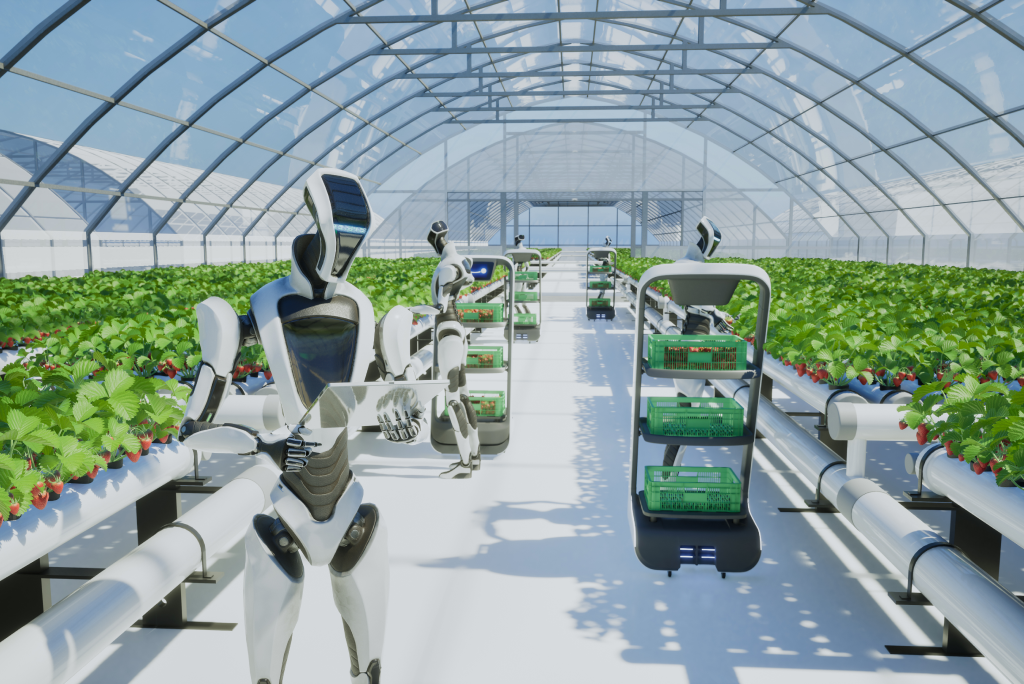
Over the past few decades, the United States has pioneered the implementation of an "IT Strategy and Digital Transformation in Agriculture." The U.S. 5-year Agricultural Digital Transformation Strategy (2021–2025) emphasizes the application of IT and unmanned aerial devices for pesticide spraying, irrigation, aerial imaging, and more. Most recently, artificial intelligence, blockchain technology, predictive weather modeling, moisture sensors, automated irrigation systems, robotics, and e-commerce applications have been rolled out to rural areas, allowing farmers to gain 100% control over their production processes and products.
U.S. Agriculture 4.0 is a strategy that positions technology and digital transformation as the core drivers of agriculture as well as local and national economic development. Agriculture 4.0 no longer relies entirely on traditional irrigation water, pesticides, and fertilizers. This digital transformation model has helped the U.S. secure food security, minimize food imports, and become the world's largest food exporter.
"The key to the success of U.S. agriculture lies in several crucial factors, such as the government's support policies for the 'three rurals' (agriculture, rural areas, and farmers). All three types of enterprises participate in the agricultural supply chain (micro-enterprises, small and medium-sized enterprises, and multinational corporations). Everyone has thoroughly utilized technology, digital transformation, and agricultural mechanization," Professor Ha Ton Vinh further analyzed.
"Digitizing" Vietnam's Agriculture Requires a Policy Push
According to Professor Ha Ton Vinh, the agricultural sectors of the U.S. and Vietnam share many similarities. However, in the U.S., 98% of farms and production facilities are small, family-owned businesses, yet they contribute over 80% of the national agricultural output. In contrast, farmers and rural enterprises in Vietnam have not actively harnessed information technology to boost production, conduct market research, or market their products. The digital transformation journey in rural areas and the agricultural sector requires tremendous efforts from the government as well as from businesses and farmers themselves.
According to Professor Ha Ton Vinh, the digital transformation journey in rural areas and the agricultural sector requires tremendous efforts from the government, businesses, and farmers alike.
He also highlighted the rapid growth of the Internet in Vietnam. With a population of around 98 million, approximately 70% use the internet, and 65 million are active social media users. Given this potential, Vietnam has the capacity to transform rapidly and even catch up with the global pace of digital transformation. The rate of internet adoption in rural Vietnam is currently quite high, serving as a key driver for rural consumers to engage in online shopping, entertainment, healthcare, and education.
To build a "National Strategy for the Digital Economy in Agriculture, Rural Areas, and Farmers" as a core pillar of the economy, Professor Ha Ton Vinh suggested that the government establish incentive mechanisms and supportive policies to help localities execute effectively.
First and foremost, it is essential to develop a national digital transformation program that positions technology as the foundation and catalyst for agricultural development. Alongside this, a national agricultural digital transformation center should be established—a place where all farmers can access information and reference everything related to agriculture from A to Z.
Simultaneously, the government should encourage the formation of high-tech, large-scale agricultural cooperatives focused on digital transformation. Each cooperative must operate as a business entity, with farmers acting as shareholders. Large enterprises should also be incentivized to invest in local cooperatives, bringing technology to villages, and purchasing produce for both domestic distribution and export.
"Crucially, eliminating all barriers and bridging the gap between urban and rural enterprises—such as access to finance and loans—will play a vital role in helping Vietnam's agricultural digitization process reach the finish line sooner," Professor Ha Ton Vinh emphasized.